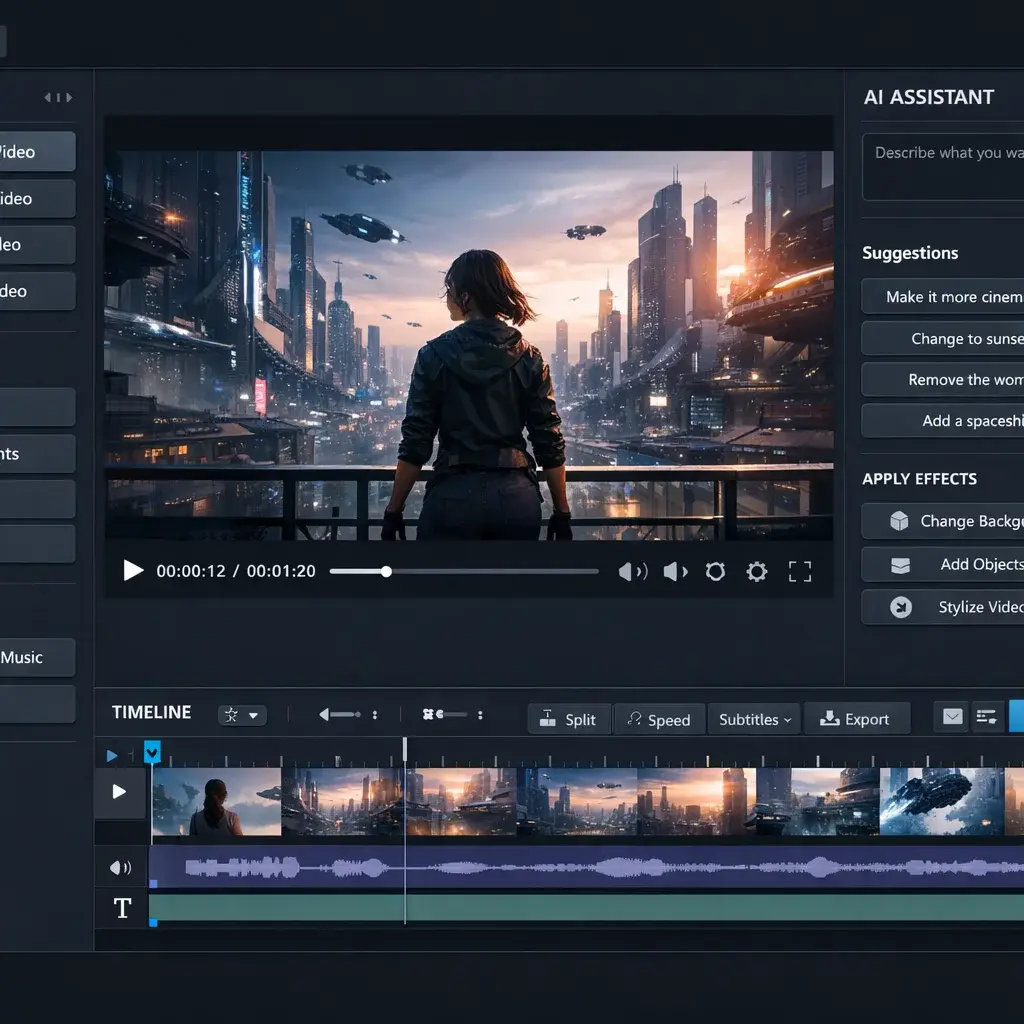
End-to-end system that converts web articles into production-ready video assets, scripts, and upload workflows for YouTube and short-form platforms. Multi-provider AI orchestration handles scraping, scripting, image generation, voice synthesis, video assembly, and automated publishing with zero manual intervention between input URL and published video.
Video content demand is massive, but production is expensive and slow. This system automates the core workflow from content ingestion through scripts, visuals, narration, assembly, and upload, enabling a scalable content operation with consistent output quality at a fraction of traditional costs.
Traditional video production for a single 8-to-12-minute YouTube video requires a writer, a graphic designer, a voice actor, a video editor, and a project manager. That team produces one video per week at a cost of $1,500 to $5,000 per finished asset. Our pipeline replaces the entire human chain with an orchestrated sequence of AI services: Firecrawl extracts and structures the source content, LLMs transform it into a narration-ready script with storyboard annotations, fal.ai generates scene-matched imagery, ElevenLabs synthesizes studio-grade voiceover, and the assembly engine composites everything into a timeline-accurate render with transitions, overlays, and background audio. The finished asset uploads to YouTube through OAuth with AI-optimized metadata. Total elapsed time: minutes, not days. Per-unit cost: single-digit dollars, not thousands.
The architecture is built for horizontal scale. Each pipeline stage is a discrete module communicating through a structured event bus, meaning the system can process dozens of videos concurrently without contention. Provider-level rate limiting, retry logic with exponential backoff, and automatic failover between alternative services ensure that transient API outages do not halt production. Cost accounting is tracked per video, giving operators granular unit economics across every AI provider invocation. This is infrastructure for running a content operation as a business, not a creative exercise.

The pipeline's front end transforms raw web content into structured datasets and narration-ready scripts with storyboard annotations, handling the creative translation that traditionally requires a human writer and creative director.
The ingestion layer uses Firecrawl to extract structured content from any URL, including JavaScript-rendered single-page applications, paywalled articles with accessible previews, and multi-page long-form content. Firecrawl returns clean markdown with metadata including title, author, publication date, and extracted images. The system parses this output into a normalized dataset format that captures the article's hierarchical structure: main thesis, supporting arguments, key data points, and quotable passages. This structured representation becomes the input contract for downstream script generation.
For batch operations, the crawler accepts sitemap URLs or RSS feeds and processes entire content archives into indexed datasets. Each extracted article is deduplicated against previously processed content using perceptual hashing of the normalized text, preventing redundant video production from syndicated or republished articles. The crawler respects robots.txt directives and implements polite crawl delays to maintain good citizenship with source domains.
The script generator ingests the structured dataset and produces a complete video script divided into timed scenes. Each scene includes narration text with embedded SSML-compatible annotations for emphasis, pauses, and pronunciation guidance. Alongside the narration, the generator outputs a storyboard prompt for each scene: a detailed image description specifying composition, style, color palette, and mood that the visual generation stage will use to create matching imagery. The LLM also produces a video-level metadata package containing an optimized title, description, tags, and three candidate thumbnail concepts. Scene transitions are annotated with suggested motion types (cut, dissolve, wipe) based on the narrative pacing and emotional arc of the script.
Each storyboard prompt feeds into fal.ai's inference infrastructure running Stable Diffusion XL and Flux models. The system generates multiple candidate images per scene at 1920x1080 resolution, then scores each candidate against the storyboard prompt using CLIP-based similarity metrics. The highest-scoring image advances to the assembly stage. Style consistency is maintained across scenes by injecting a persistent style directive into every prompt: aspect ratio, color temperature, artistic style (photorealistic, illustration, cinematic), and subject framing rules. This ensures visual coherence across a 10-minute video even though each frame is generated independently.
For scenes that benefit from motion, the pipeline routes the selected still image through the Wan video generation model, which produces 3-to-5-second animated clips with natural camera movement and subtle environmental motion. The Wan model excels at parallax effects, slow zoom, and atmospheric animations that transform static compositions into cinematic sequences. Runway's gen-3 model serves as an alternative provider for motion generation, activated automatically when the Wan model queue exceeds latency thresholds or when the scene's motion requirements exceed Wan's capabilities (complex character animation, fluid dynamics, etc.).
ElevenLabs' Turbo v2.5 model synthesizes the narration audio from the annotated script. The system maintains a library of voice profiles tuned to content verticals: an authoritative baritone for business and finance, a warm conversational tone for lifestyle and education, and an energetic delivery for technology and entertainment. Voice cloning capabilities allow channel operators to establish a consistent narrator identity that listeners associate with their brand. The narration module segments the script into timed blocks aligned with scene boundaries, generating individual audio files with precise start and end timestamps. The assembly engine uses these timestamps to synchronize visual transitions with speech cadence, ensuring that scene changes land on natural sentence breaks rather than interrupting the narrator mid-thought.
Firecrawl handles JavaScript-rendered pages and returns clean markdown. Cheerio provides lightweight DOM parsing for structured metadata extraction. Axios manages HTTP requests with retry logic, rate limiting, and proxy rotation for high-volume crawling operations.
Transforms structured datasets into timed narration scripts with SSML annotations, storyboard prompts per scene, transition directives, and video-level metadata packages. Supports configurable tone, length, and audience targeting parameters.
fal.ai runs SDXL and Flux models for still imagery with CLIP-based candidate scoring. Wan and Runway gen-3 produce animated clips from selected stills. Automatic provider failover ensures generation continuity during API outages.
Turbo v2.5 model with voice cloning, SSML emphasis markers, and timed audio segmentation. Multiple voice profiles per content vertical with consistent narrator identity across entire channel libraries.
Composites images, animated clips, narration audio, background music, and text overlays into timeline-accurate renders. Ken Burns motion on stills, algorithmic transition selection, and Descript integration for fine-tuning.
Automated upload through YouTube Data API v3 with OAuth 2.0 token management. AI-optimized titles, descriptions, tags, and thumbnail selection. S3-backed asset archival for cross-platform repurposing.
The orchestration layer is the nervous system of the pipeline. It manages inter-stage dependencies, handles provider failures gracefully, tracks per-video costs, and ensures that concurrent productions do not contend for shared resources.
The entrypoint module orchestrate.js implements a directed acyclic graph (DAG) of pipeline stages. Each stage declares its input contract and output schema, enabling the orchestrator to validate data flow between stages at runtime and fail fast on schema violations before expensive API calls are made. The DAG topology supports conditional branching: if a scene's storyboard prompt includes motion keywords, the orchestrator routes through the animation generation path; otherwise, it skips directly to still-image compositing, saving both time and API costs.
Retry logic uses exponential backoff with jitter to prevent thundering-herd effects when a provider recovers from an outage. Each provider integration includes a circuit breaker that opens after three consecutive failures, redirecting traffic to alternative providers for a configurable cooldown period before attempting to re-establish the primary connection. This architecture ensures that a fal.ai rate limit at 2 AM does not leave a batch of 50 videos stalled until morning.
Every API invocation is metered and attributed to the specific video that triggered it. The orchestrator maintains a running cost ledger per video recording provider, model, token count, image count, audio duration, and compute seconds consumed. At completion, each video has a precise cost-of-goods-sold figure broken down by pipeline stage. This granularity enables operators to identify which content types are most cost-efficient to produce, optimize prompt engineering to reduce token consumption, and negotiate volume discounts with providers based on actual usage data rather than estimates.
Technical depth across every pipeline stage, from content normalization through final render, with production-grade error handling and operational tooling at each boundary.
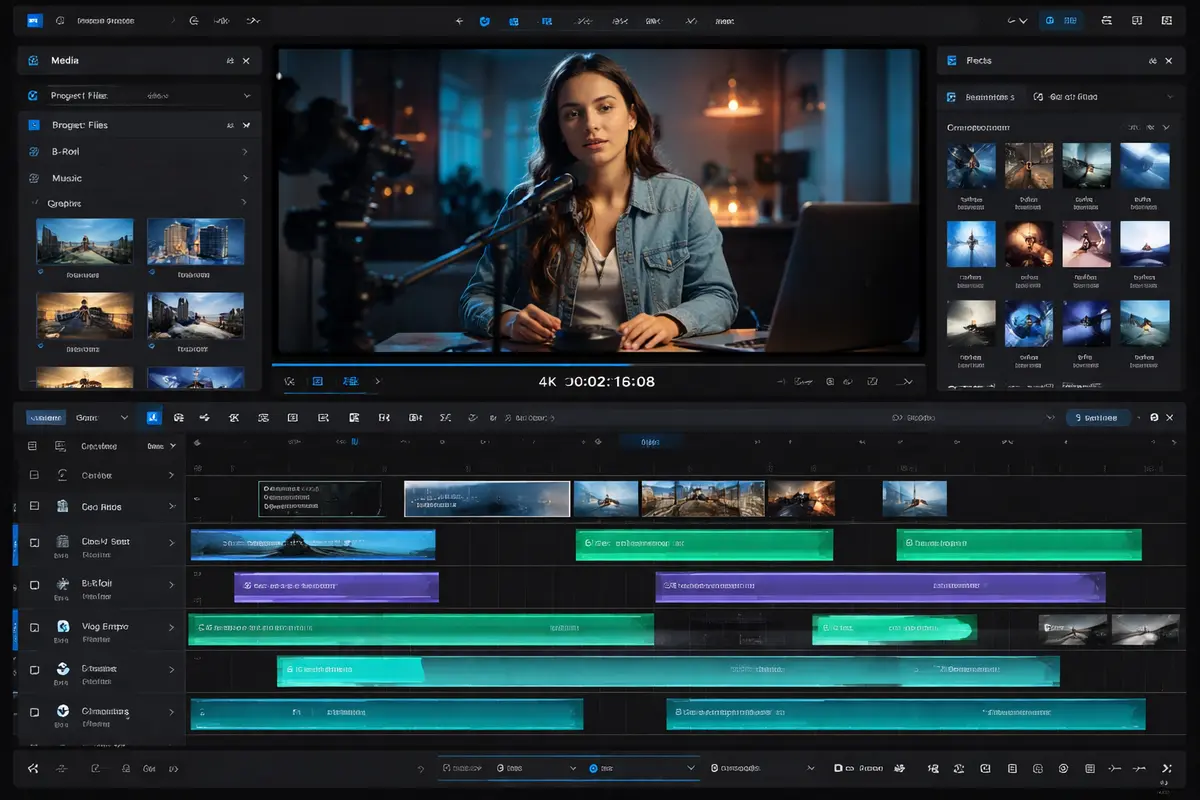
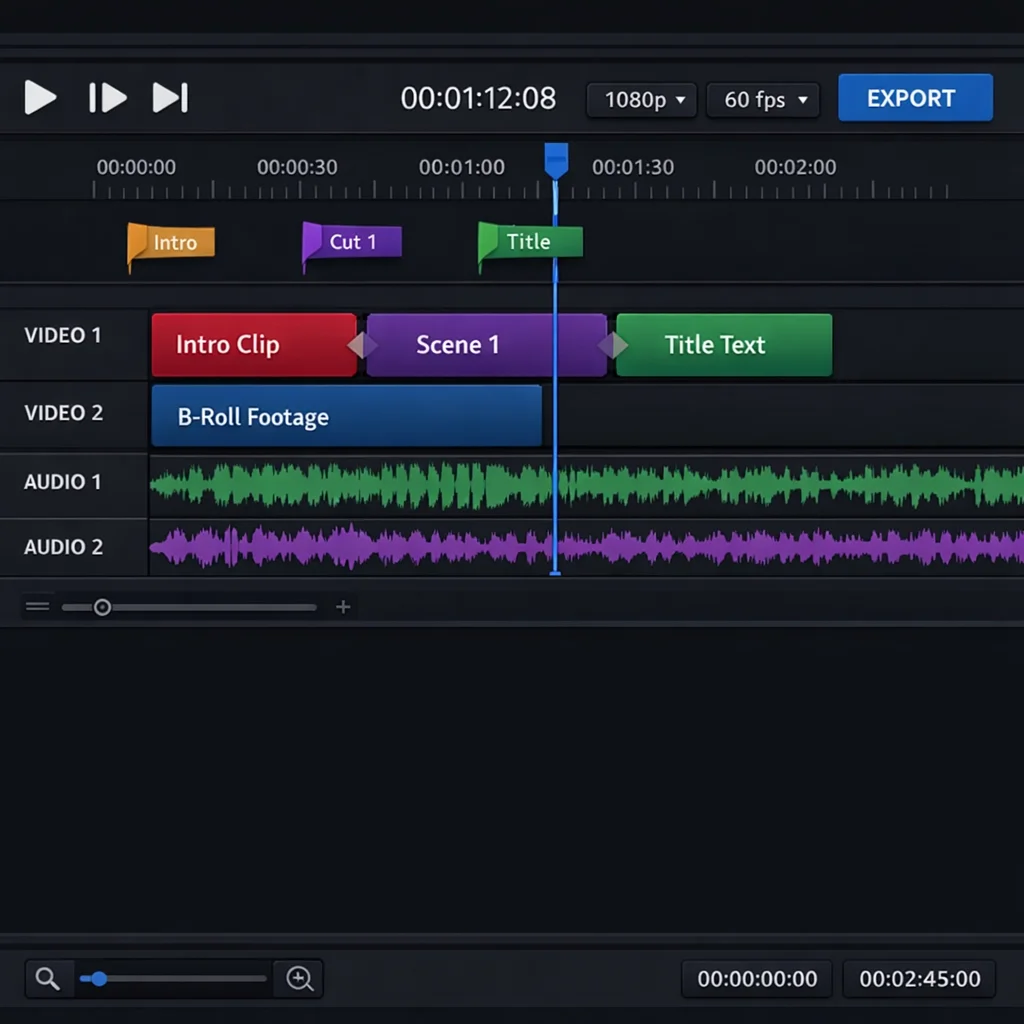
The assembly engine operates on a timeline data structure that maps narration audio segments to their corresponding visual assets. Each segment specifies the visual type (still image, animated clip, or text card), the Ken Burns motion parameters (start/end crop, zoom direction, speed), the transition type to the next segment, and any text overlays with font, position, and timing. Background music is selected from a licensed library based on the script's mood annotations, with automatic ducking triggered by narration onset and offset timestamps. The renderer produces a final MP4 at 1080p/30fps with AAC audio, optimized for YouTube's recommended encoding profile.
The pipeline generates three thumbnail candidates per video using the script's thumbnail concepts as prompts. Each candidate is scored on four dimensions: visual contrast ratio (ensuring readability at thumbnail scale), color saturation (bright thumbnails earn higher click-through rates), face/object prominence (larger subjects perform better), and text overlay clarity (title text must remain legible at 320x180 pixels). The highest-scoring candidate is attached to the YouTube upload. A/B testing data from prior uploads feeds back into the scoring model, continuously improving thumbnail selection accuracy.
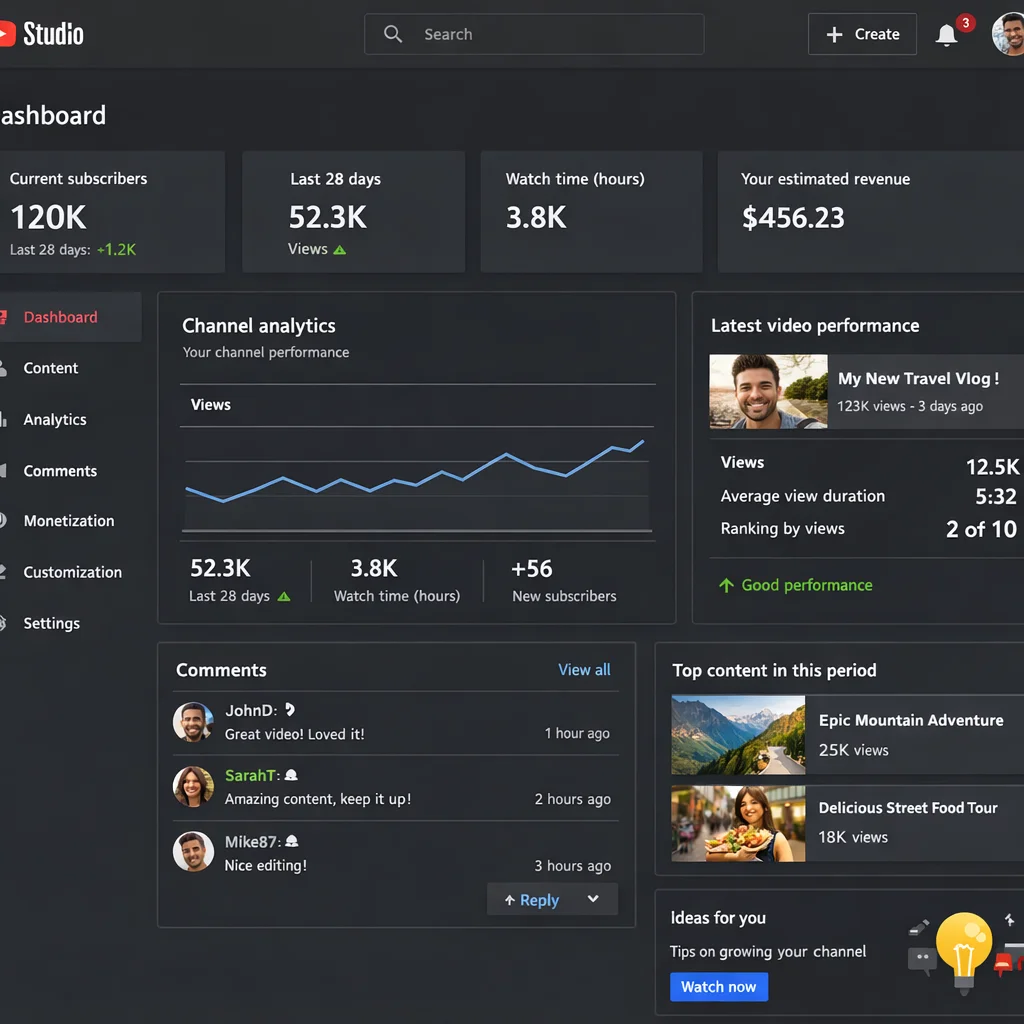
The distribution module authenticates through YouTube Data API v3 using OAuth 2.0 with automatic token refresh. Uploads are resumable: if the connection drops mid-transfer, the module resumes from the last acknowledged byte rather than restarting. Video metadata includes AI-optimized titles (under 60 characters with power words), descriptions (structured with timestamps, key takeaways, and hashtags), and tags derived from the source content's topic modeling. The module sets the video's category, language, and default audio track, then schedules publication for the channel's optimal posting window based on historical audience activity data.
Every intermediate and final asset is archived to S3 with a structured key hierarchy: /{channel}/{video-id}/{stage}/{asset}. This archive enables cross-platform repurposing: the same narration audio and visual assets can be re-composited into vertical-format shorts for TikTok and Instagram Reels, square-format clips for LinkedIn, and audio-only exports for podcast distribution. The archive also serves as a debugging surface: when a video's output quality is below expectations, operators can inspect every intermediate artifact to identify which pipeline stage introduced the issue.
No human intervention between input URL and published YouTube video. The system handles content extraction, creative decisions, asset generation, compositing, rendering, and distribution as a single atomic operation with structured error recovery at every stage boundary.
Best-of-breed AI providers for each modality (images, video, voice) with circuit-breaker failover and per-invocation cost tracking. Operators see exactly what each video costs across every API call, enabling data-driven optimization of prompt engineering and provider selection.
Extensive documentation covering every failure mode encountered in production: provider rate limits, OAuth token expiry, rendering artifacts, audio synchronization drift, and thumbnail scoring calibration. Each runbook includes automated remediation scripts that operators can execute without engineering escalation.
S3-backed asset archive with structured key hierarchies enables repurposing of generated assets across YouTube, TikTok, Instagram Reels, LinkedIn, and podcast platforms. One production run generates source material for every major distribution channel without regenerating expensive AI assets.
Production-tested pipeline with comprehensive automation, cost tracking, and operational documentation delivering measurable improvements over traditional content production workflows across every dimension.
Per-video cost reduction vs. traditional production
URL-to-published-video elapsed time
AI providers with circuit-breaker failover
Concurrent videos without contention
The pipeline transforms video production from a labor-intensive creative process into a scalable, predictable operation with measurable unit economics. Channel operators can plan content calendars based on cost-per-video data and produce at volumes that would be physically impossible with human production teams.
Marketing teams and agencies convert thought leadership articles, whitepapers, and case studies into professional video content without production crews or studio time. The pipeline's configurable tone and branding parameters ensure every output matches the client's visual identity.
Educational platforms and corporate training programs convert documentation, course materials, and technical guides into engaging video tutorials with professional narration. The pipeline's structured script format preserves instructional hierarchy and learning objectives.
Pipeline DAG entrypoint, stage routing, and cost ledger
Core stage modules: ingest, script, visual, voice, assembly
Batch runners, provider health checks, and upload helpers
Operational runbooks, failure playbooks, and API guides
Provider adapters with circuit breakers and fallback config
Script prompts, style directives, and metadata templates
All provider API keys, OAuth tokens, and channel credentials are managed through environment variables and 1Password secret injection. No credentials are committed to source control. YouTube OAuth refresh tokens are encrypted at rest with AES-256 and rotated on a configurable schedule. Full API key audit trails and access logs are available for qualified investors under NDA.
Learn how we can automate your content production workflows at scale.