AI Market Intelligence Engine

Proprietary AI pipeline that autonomously discovers and scores revenue opportunities across multiple data sources using local LLM inference and RAG-based semantic search - delivering institutional-grade market intelligence at zero marginal cost per query.

$0
Per Query Cost
Multi
Source Ingestion
RAG
Semantic Search
Local
LLM Inference
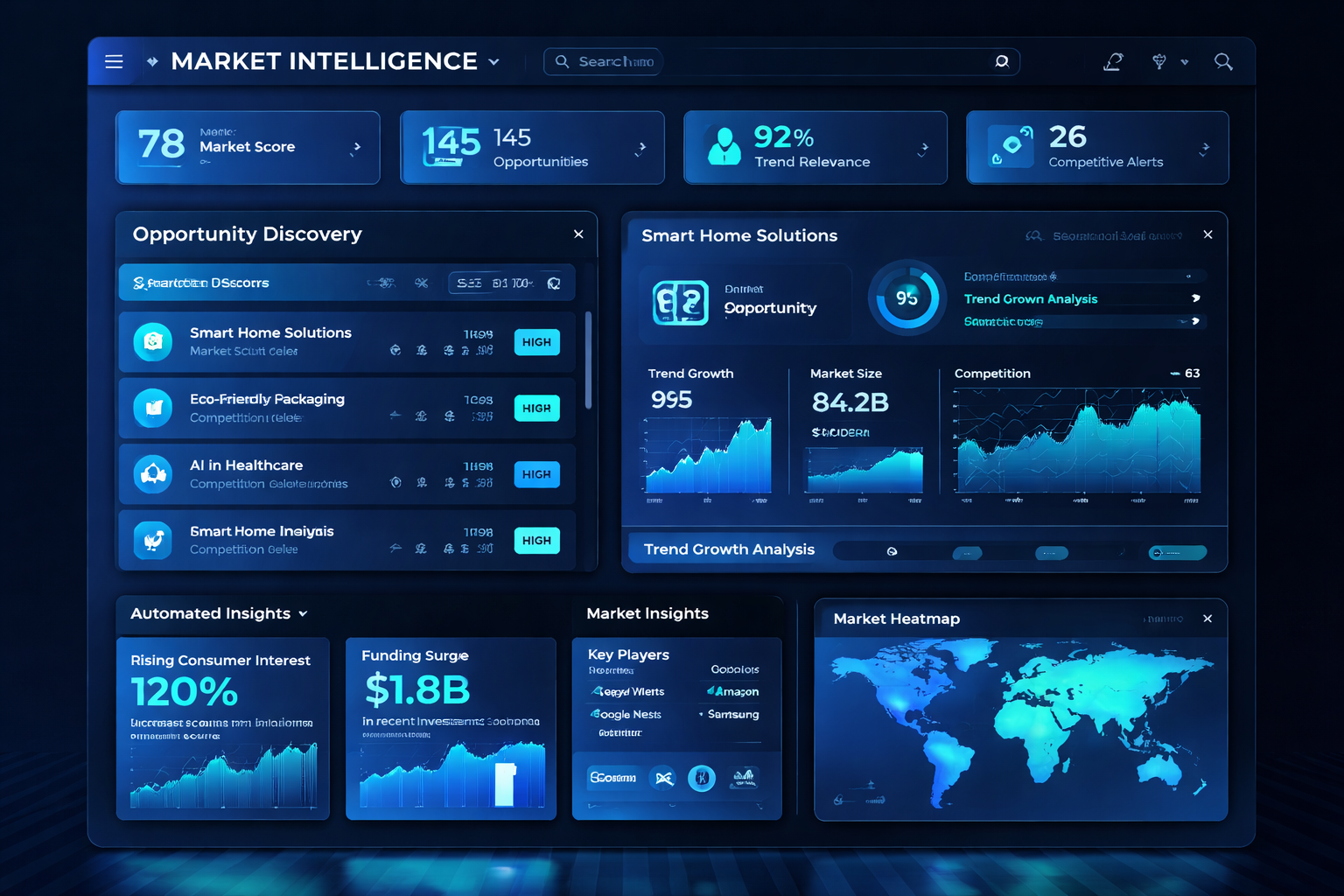
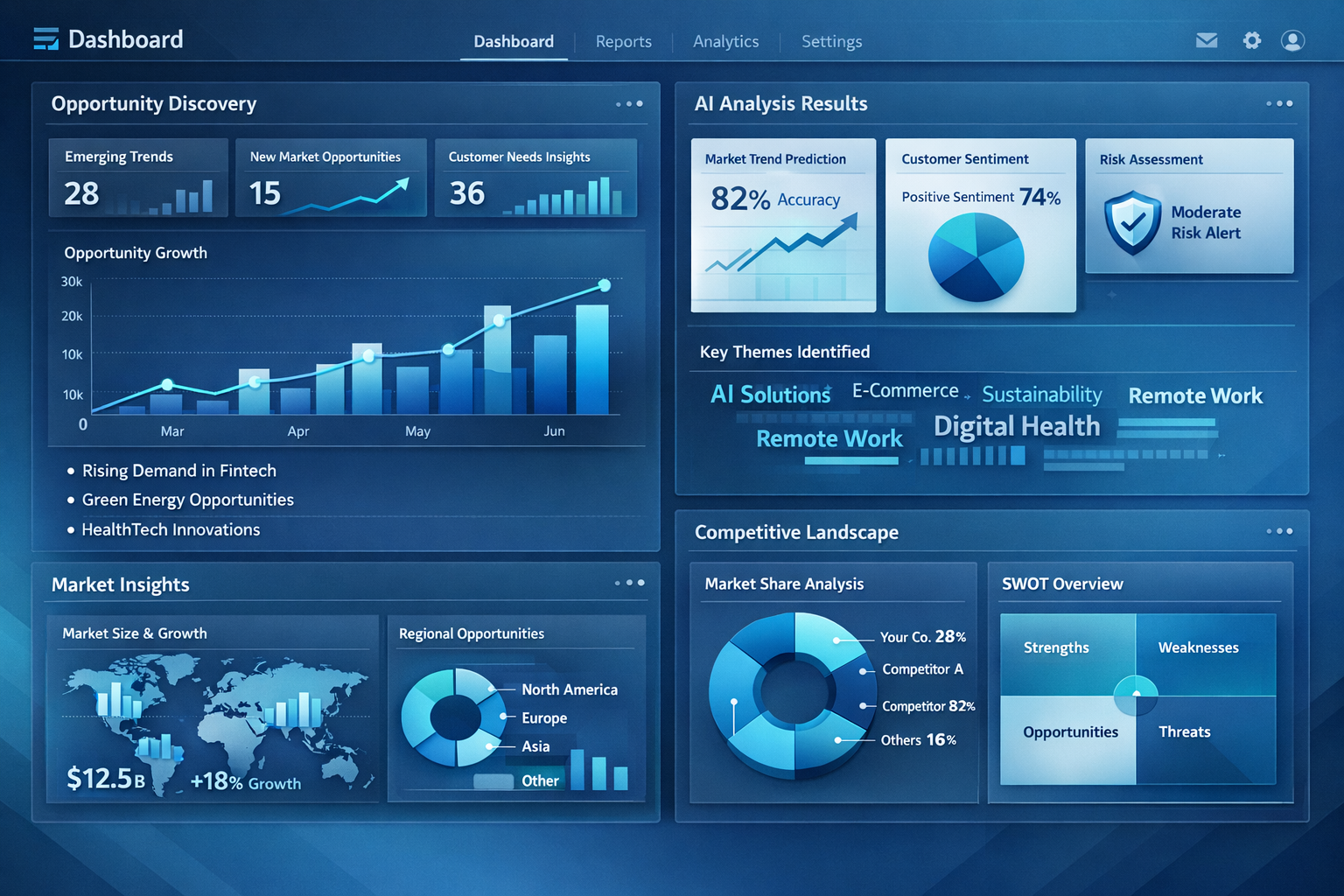
AI opportunity research bot dashboard showing real-time deal scoring

Investor Summary

Opportunity discovery is noisy and time-intensive. This system automates sourcing and analysis across multiple channels, scores opportunities with local LLMs, and stores results in a semantic search database for rapid filtering and decision support.

The $50B+ market intelligence industry relies on expensive subscriptions and manual research. By running local LLM inference on a Qwen 30B model, we eliminate per-query API costs while delivering institutional-grade analysis that scales infinitely without marginal cost increases. Every opportunity is embedded into ChromaDB for instant semantic retrieval, enabling analysts to query the entire opportunity corpus in natural language rather than relying on keyword filters or manual spreadsheet reviews.

Our pipeline ingests from Reddit communities, Indie Hackers forums, and targeted Google dorking queries on a configurable schedule. Each raw signal passes through a structured scoring methodology that evaluates market size, competitive landscape, technical feasibility, and revenue potential. The result is a continuously growing intelligence database that compounds in value with every ingestion cycle.

Product Capabilities

  • ✓ Scrapers for Reddit, Indie Hackers, and Google dorking
  • ✓ LLM analysis pipeline with structured scoring methodology
  • ✓ ChromaDB-based semantic search and metadata filtering
  • ✓ Production, demo, and personalization pipelines
  • ✓ Cron automation and setup scripts for hands-off operation
  • ✓ FICO-based personalization for credit-aware deal matching
  • ✓ Natural language query interface over opportunity corpus

Deep Dive: The RAG Pipeline

Our Retrieval-Augmented Generation architecture transforms raw web signals into structured, queryable market intelligence through a multi-stage processing pipeline.

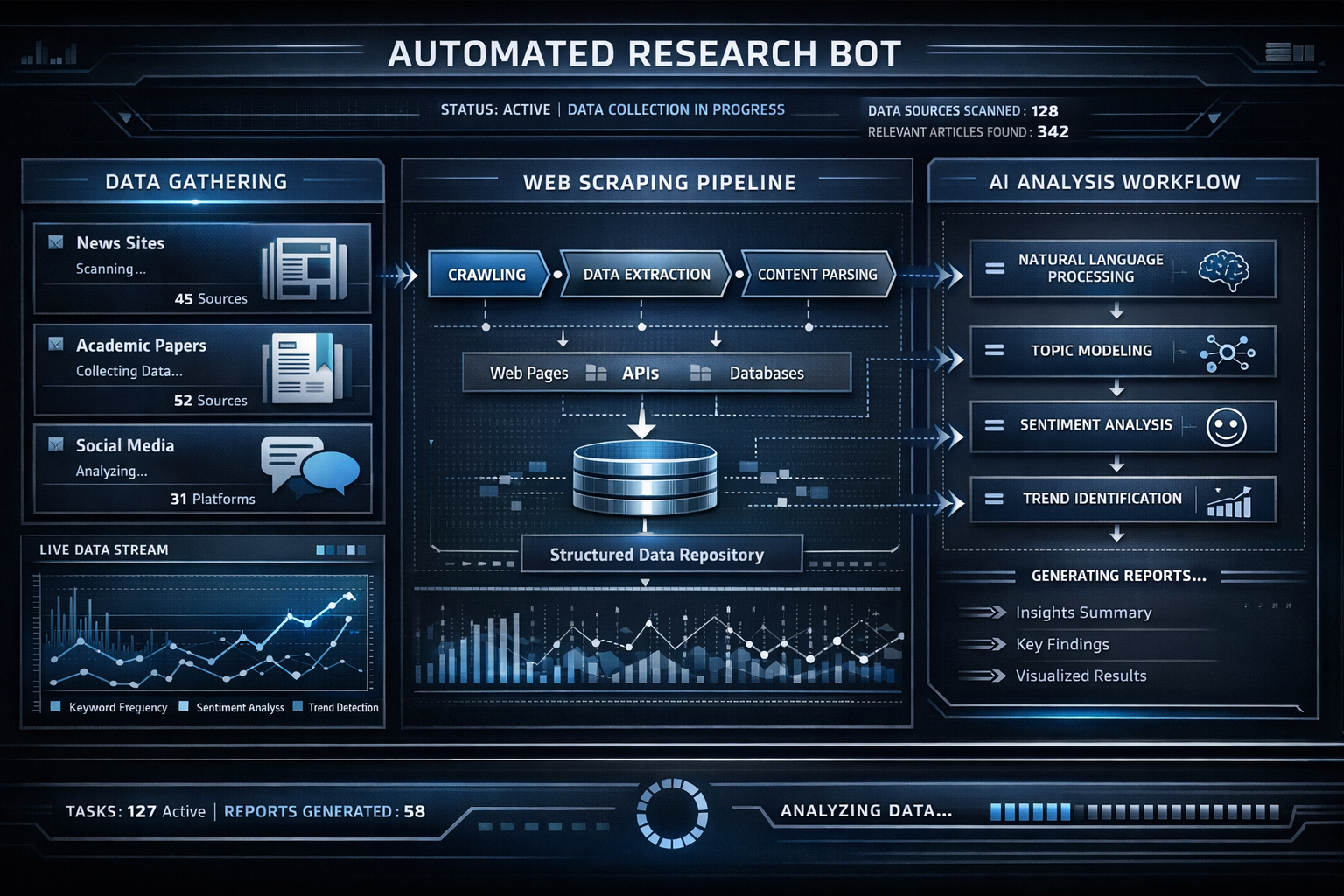
RAG pipeline architecture diagram showing data flow from ingestion to semantic retrieval

How It Works

The pipeline begins with multi-source ingestion. Custom scrapers monitor Reddit subreddits like r/SideProject and r/Entrepreneur, parse Indie Hackers discussion threads, and execute targeted Google dorking queries designed to surface early-stage business signals that traditional market research tools miss entirely.

Raw text from each source passes through a preprocessing stage that normalizes formatting, extracts key entities, and removes noise. The cleaned content is then forwarded to our local Qwen 30B language model running on dedicated GPU hardware for structured analysis.

The LLM evaluates each opportunity against a consistent rubric covering market size estimation, competitive density, technical complexity, monetization potential, and time-to-revenue. Scored opportunities are embedded as dense vectors and stored in ChromaDB alongside rich metadata, enabling both semantic similarity search and structured filtering.

System Architecture

🔎

Multi-Source Ingestion

Automated scraping from Reddit, Indie Hackers, and custom Google dorking queries. Continuous monitoring across multiple opportunity channels with configurable frequency and source targeting.

🤖

Local LLM Analysis

Structured opportunity scoring using Qwen 30B running on local GPU hardware. Zero API costs, full data privacy, and consistent methodology across every discovered opportunity.

🗃

RAG-Based Retrieval

ChromaDB vector search for rapid opportunity filtering and decision workflows. Semantic search across your entire opportunity database with metadata-aware filtering.

Implementation Details

Built on production-grade infrastructure designed for reliability, scalability, and zero ongoing API expenditure.

ChromaDB Vector Storage

Each scored opportunity is converted into a high-dimensional embedding vector using sentence transformers and stored in ChromaDB. This enables semantic similarity search, meaning analysts can query opportunities by concept rather than exact keyword matches. Asking for "passive income SaaS with low competition" returns conceptually relevant results even when those exact phrases never appear in the source material.

Deal Scoring Methodology

The scoring rubric evaluates each opportunity on five dimensions: addressable market size, competitive landscape density, technical barrier to entry, estimated time-to-first-revenue, and automation potential. Each dimension receives a weighted score, and the composite result determines the opportunity's priority ranking. The personalization layer can further adjust scores based on the user's FICO profile and credit capacity, surfacing opportunities that align with available financing options.

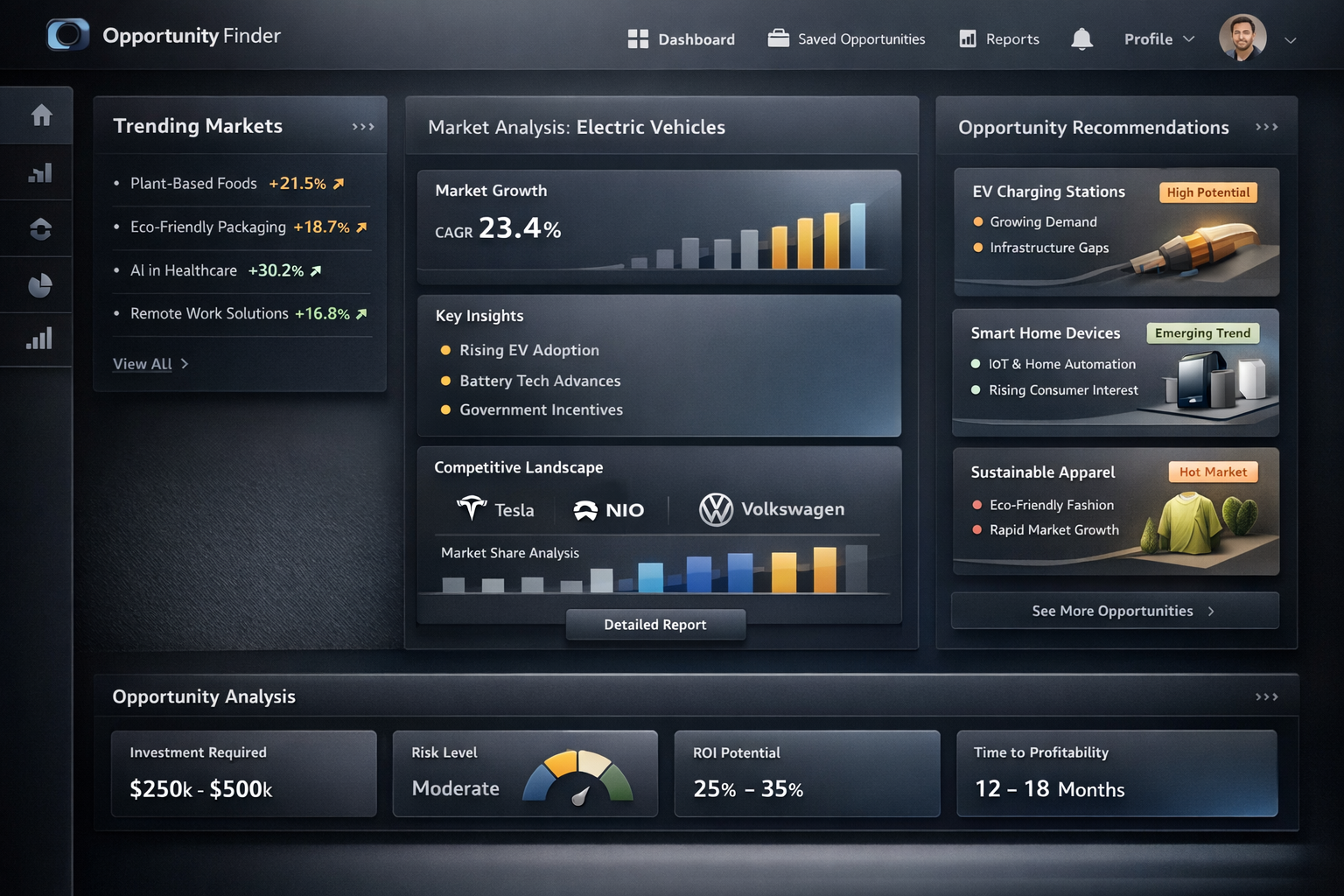
Deal scoring dashboard showing multi-dimensional opportunity analysis

Technology Stack

Python PRAW BeautifulSoup ChromaDB Qwen 30B RAG Pipeline Vector Database Sentence Transformers Cron Automation llama.cpp

Differentiation and Moat

Multi-Source

Consistent scoring methodology across all ingestion channels for apples-to-apples comparison.

Zero API Costs

Local LLM analysis eliminates ongoing per-query expenses and removes third-party dependency.

RAG Retrieval

Optimized for decision workflows with semantic search and metadata-aware filtering.

Production-Ready

Cron scheduling for hands-off automated operation with monitoring and alerting.

Results & Impact

Measurable outcomes demonstrating the platform's value in reducing research overhead and accelerating deal flow.

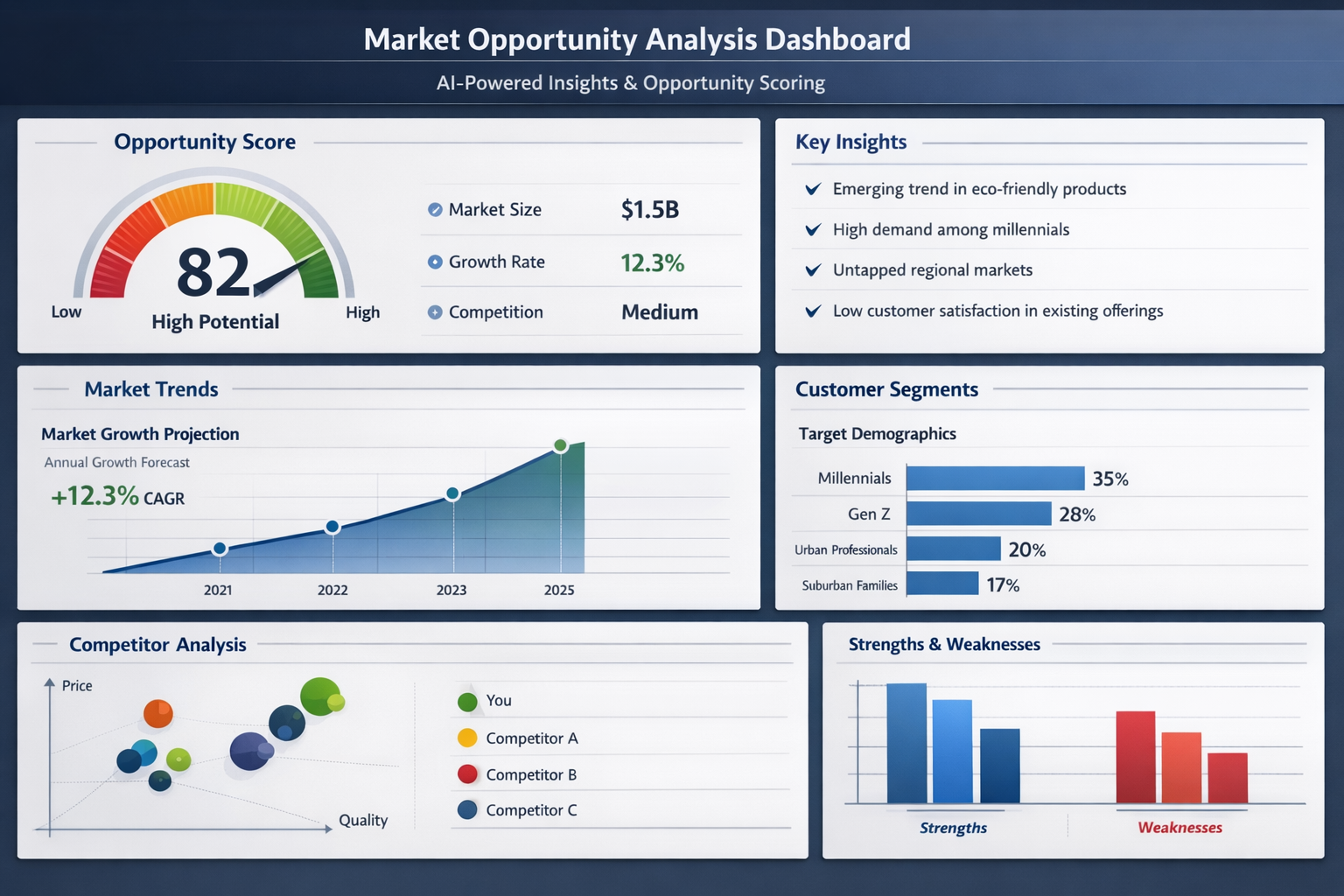
Market intelligence analytics showing opportunity trends and scoring distributions

Research Time Reduction

Manual opportunity research that previously required 15-20 hours per week is now fully automated. The pipeline runs on a configurable cron schedule, continuously building a growing corpus of scored opportunities without human intervention.

Cost Elimination

By running Qwen 30B locally via llama.cpp on dedicated GPU hardware, the system processes unlimited queries with zero marginal cost. Comparable cloud-based LLM analysis would cost $0.03-0.10 per opportunity at scale.

Compounding Intelligence

The vector database grows more valuable with each ingestion cycle. Historical trend analysis reveals emerging patterns across sectors, and semantic search improves as the corpus expands, delivering richer contextual results over time.

Commercial Use Cases

Applicable across venture capital, corporate strategy, and entrepreneurial research workflows.

Deal Sourcing

Automated opportunity discovery for venture capital and private equity firms seeking early-stage signals before they reach mainstream deal platforms.

Market Intelligence

Internal research and competitive analysis for strategic planning teams who need continuous monitoring of emerging market dynamics.

Product Ideation

Trend analysis and opportunity validation for founders and product teams seeking data-driven validation of new business concepts.

Semantic search interface showing natural language opportunity queries and results

Evidence of Execution

Pipeline Entrypoints

production_opportunity_pipeline.py

Scrapers

scrapers/ with configs and handlers

Vector Storage

data/ with ChromaDB assets

Architecture

ARCHITECTURE.md system design

Interested in This Solution?

Learn how we can build custom AI market intelligence systems for your organization.

Schedule a Demo View All Projects