LLM Reliability & Safety Lab

Enterprise research and evaluation platform for testing LLM behavior, cataloging adversarial techniques, benchmarking quantization formats, and presenting results through interactive Flask dashboards and OPML mindmaps — providing repeatable, auditable evaluation infrastructure for production AI systems.

40+
Models Benchmarked
3x
Faster Evaluation Cycles
60%
GPU Cost Reduction
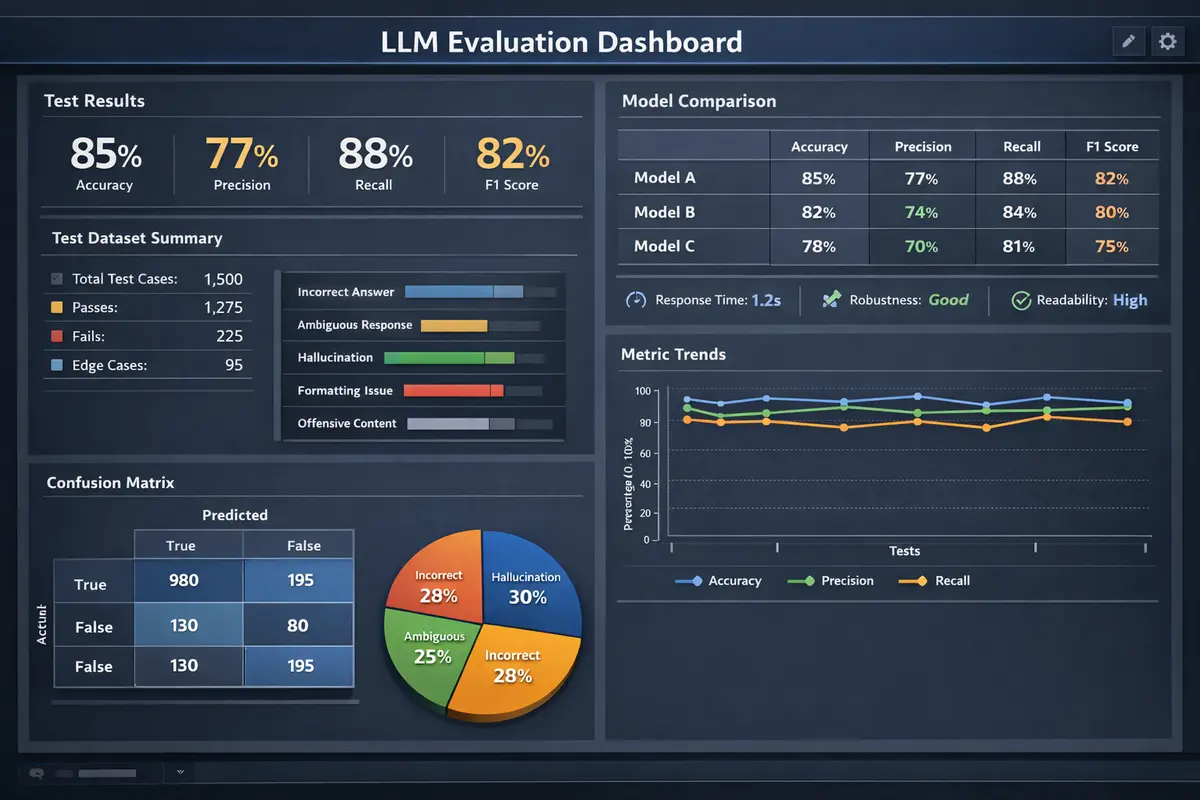
LLM optimization dashboard interface showing evaluation metrics and technique taxonomy

Investor Summary

As AI adoption accelerates across every industry vertical, organizations face a critical gap: the absence of repeatable, auditable evaluation infrastructure for the language models they depend on. This framework provides a structured approach to catalog evaluation techniques, record benchmarking results, assess model security posture, and present findings in a dashboard-friendly format suitable for both engineering teams and executive decision makers.

The $300B+ enterprise AI market demands rigorous evaluation tooling that goes far beyond simple accuracy metrics. Regulatory frameworks like the EU AI Act now mandate systematic model evaluation and risk documentation before deployment. The White House Executive Order on AI Safety introduced accountability requirements that span the full model lifecycle. Organizations that lack structured testing infrastructure face both compliance risk and competitive disadvantage as these regulations move from proposal to enforcement.

Our framework addresses the complete LLM evaluation lifecycle, from initial model selection and quantization analysis through production monitoring and behavioral drift detection. Rather than treating model assessment as a one-time checkpoint, the platform establishes continuous evaluation pipelines that track performance across hardware configurations, quantization formats, and prompt variations. Every evaluation run produces auditable artifacts stored in SQLite with full provenance metadata, enabling longitudinal analysis that reveals trends invisible to point-in-time testing. The interactive Flask dashboard and OPML mindmap visualizations translate complex technical data into navigable reports for stakeholders ranging from ML engineers to board-level governance committees.

ML engineer celebrating as performance metrics spike upward

Product Capabilities

  • Flask dashboard for real-time evaluation stats, drill-down reports, and OPML taxonomy browsing
  • Technique reference library with structured markdown catalogs and automated data generation scripts
  • Interactive mindmap and visualization assets for executive-level review and stakeholder presentations
  • Model quantization benchmarking across GGUF, GPTQ, and AWQ formats with quality-speed tradeoff analysis
  • vRAM profiling and inference throughput optimization with multi-GPU tensor parallelism support
  • Deployment and verification scripts for automated hosting, health checks, and access control
  • Integration-ready SQLite storage with JSON and PDF export for evaluation databases and CI/CD pipelines

Deep Dive: Model Quantization and Inference Optimization

Running large language models in production requires balancing output quality, inference speed, and hardware cost. Our framework provides systematic tools for identifying the optimal configuration for any deployment scenario, from edge devices to multi-GPU clusters.

Quantization Format Analysis

Modern large language models ship with full-precision weights that demand expensive GPU hardware to serve at acceptable latency. A 70B-parameter model at FP16 precision requires over 140GB of vRAM just to load the weights, before accounting for KV-cache, attention buffers, and batch processing overhead. Quantization addresses this by reducing the numerical precision of model weights from 16-bit or 32-bit floating point to smaller representations such as 8-bit, 4-bit, or even 2-bit integers. The challenge lies in understanding exactly how much quality degrades at each precision level for a given model architecture and use case.

Our framework benchmarks models systematically across three dominant quantization ecosystems. GGUF (GPT-Generated Unified Format) provides CPU-friendly quantization with a range of precision levels from Q2_K through Q8_0, making it the standard for llama.cpp deployments. GPTQ (Generative Pre-Trained Transformer Quantization) uses calibration data to minimize quantization error and performs well on NVIDIA GPUs through the AutoGPTQ library. AWQ (Activation-Aware Weight Quantization) preserves salient weight channels that disproportionately affect model quality, delivering superior perplexity retention at aggressive 4-bit quantization levels.

For every model tested, the framework produces a detailed report containing perplexity measurements on standardized test corpora, tokens-per-second throughput across batch sizes, peak vRAM consumption broken down by model component, and time-to-first-token latency under varying concurrent request loads. These reports are stored in SQLite with full provenance metadata including the model version hash, quantization parameters, hardware configuration, driver versions, and system load at test time, enabling fair comparison across runs separated by weeks or months.

Model quantization benchmarks showing perplexity-throughput tradeoff curves across GGUF, GPTQ, and AWQ formats
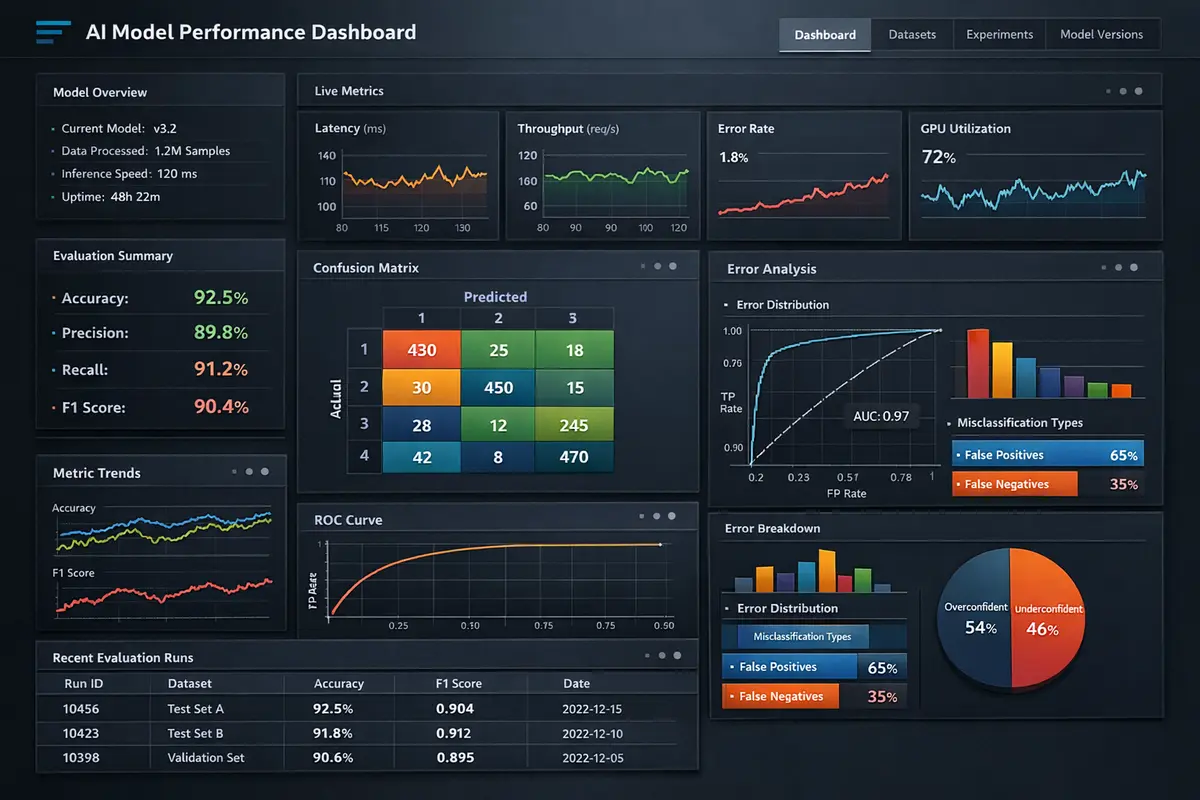
vRAM profiling dashboard showing layer-by-layer memory allocation and KV-cache scaling analysis

vRAM Budget Management and Capacity Planning

GPU memory is the primary constraint in LLM deployment, and misestimating requirements leads to either wasted hardware spend or production out-of-memory failures under load. Our profiler maps the exact vRAM consumption of each model layer, attention head, and KV-cache allocation at various context window lengths, enabling precise capacity planning before committing to hardware purchases. The profiling data reveals that vRAM consumption scales non-linearly with context length due to KV-cache growth, meaning a model that fits comfortably with 4K context may fail at 32K context even on the same hardware.

Teams can simulate different batch sizes, context window lengths, and concurrent request loads through the dashboard to visualize exactly when a given GPU configuration will exhaust available memory. The simulation accounts for memory fragmentation, PyTorch CUDA allocator behavior, and the overhead of inference frameworks like vLLM and llama.cpp that maintain their own memory pools. For multi-GPU configurations, the framework models tensor parallelism overhead including the inter-GPU communication cost of AllReduce operations over NVLink or PCIe, which becomes the throughput bottleneck once model weights fit comfortably in distributed memory.

This capacity planning capability has proven particularly valuable for organizations evaluating whether to deploy on consumer GPUs like the RTX 4090 (24GB vRAM) versus data center cards like the A100 (80GB vRAM) or H100 (80GB HBM3). The cost difference between these tiers is substantial, and our profiling data consistently shows that carefully selected 4-bit quantizations on consumer hardware deliver 90-98% of the output quality achievable with full-precision models on data center GPUs, at a fraction of the capital expenditure.

Framework Components

Data scientist running benchmarks on a powerful GPU cluster
📊

Interactive Dashboard

Flask Evaluation Portal

Real-time visualization of LLM behavior patterns and test results through a Flask-powered web interface. The dashboard surfaces evaluation metrics with configurable time-range filters, model comparison views, and drill-down navigation from summary statistics to individual test outputs. OPML taxonomy browsing presents the technique library as a navigable tree structure, enabling researchers to explore evaluation categories and their associated test results without leaving the browser. Jinja2 templates render server-side for instant page loads without JavaScript framework overhead.

📚

Technique Library

Structured Evaluation Catalog

Comprehensive catalog of evaluation techniques and methodologies maintained as structured markdown documents with machine-readable frontmatter. Each technique entry includes a description, applicable model families, expected behavior criteria, scoring rubrics, and reference implementations. Data generation scripts produce synthetic test datasets calibrated to specific evaluation dimensions, enabling consistent testing across model versions and quantization formats. The library grows organically as new evaluation scenarios are discovered and codified.

🎨

OPML Mindmaps

Executive Visualization

Interactive mindmap visualizations built from OPML outlines that make complex evaluation taxonomies accessible to non-technical stakeholders. The mindmap renderer uses client-side JavaScript to present hierarchical technique categories as expandable and collapsible tree nodes, with color-coded severity indicators and pass/fail badges derived from the latest evaluation data. OPML-to-JSON conversion utilities enable integration with third-party visualization tools and slide deck generators for boardroom presentations.

Deep Dive: Benchmarking Methodology and Safety Assessment

From reproducible benchmark design to adversarial robustness testing, the framework covers every phase of LLM evaluation with automated pipelines and auditable reporting.

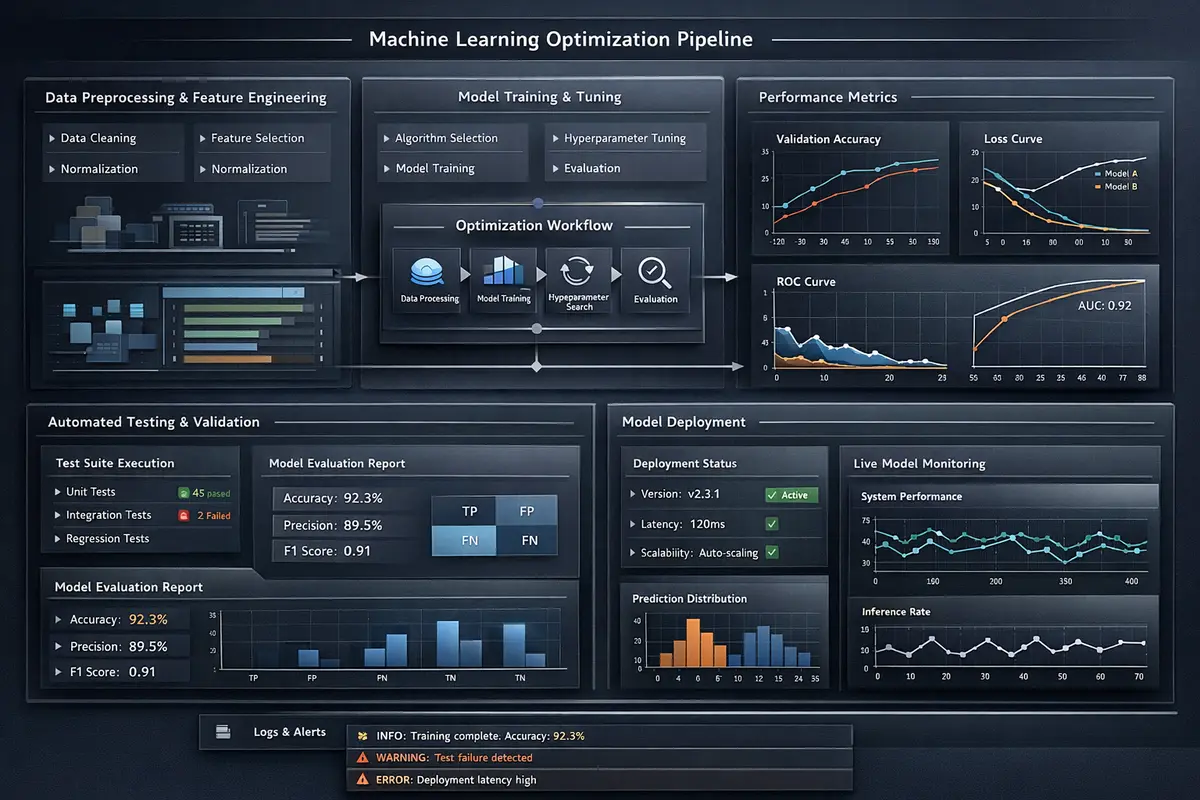
Evaluation pipeline architecture showing test suite execution, scoring, and report generation

Reproducible Evaluation Protocols

Every evaluation follows a reproducible protocol designed to eliminate the confounding variables that plague ad hoc model testing. Test suites are defined as JSON manifests that specify the exact prompts, system instructions, sampling parameters (temperature, top-p, top-k), expected behavior criteria, and scoring rubrics. The framework executes each test against the target model configuration, captures raw outputs with full token-level probability distributions where available, applies automated scoring functions, and generates summary statistics with confidence intervals.

Results are persisted in SQLite with comprehensive provenance metadata including the model identifier, quantization format and parameters, hardware configuration (GPU model, driver version, CUDA version), inference framework and version, system load at test time, and a SHA-256 hash of the test suite definition. This level of provenance enables longitudinal analysis across model updates, allowing teams to detect behavioral regressions that emerge when a provider releases a new model version or when quantization parameters are adjusted.

Security and Adversarial Testing

Enterprise AI deployments require rigorous security testing before production release. The framework includes structured assessment modules that probe model behavior across adversarial inputs, boundary conditions, and compliance-sensitive scenarios. Test categories cover prompt injection resistance, system prompt extraction attempts, output consistency under paraphrased inputs, and behavior with multilingual inputs designed to bypass English-language safety filters. Results are categorized by severity level and mapped to organizational risk frameworks, enabling security teams to produce deployment readiness certificates. All assessment results export in JSON and PDF formats for integration with existing governance workflows, audit documentation, and regulatory compliance filings.

Technology Stack

Python Flask SQLite Jinja2 HTML/JS OPML JSON Bootstrap GGUF GPTQ AWQ llama.cpp vLLM AutoGPTQ

Differentiation and Moat

Structured Taxonomy

Combines technique cataloging with interactive OPML visualization, producing a navigable knowledge base that connects evaluation methodologies to concrete test results. The taxonomy grows organically as new model behaviors and attack surfaces are discovered, creating institutional knowledge that compounds with every evaluation cycle.

Executive-Ready Artifacts

Produces reports suitable for internal research, executive review, and regulatory filings. Mindmap visualizations translate complex technical evaluation data into navigable business insights. PDF export with provenance metadata satisfies audit requirements for organizations operating under AI governance mandates like the EU AI Act.

Pipeline Integration

Built to integrate seamlessly with evaluation databases, CI/CD pipelines, and model registries through standard JSON and SQLite interfaces. Evaluation runs can be triggered from GitHub Actions, Jenkins, or any CI system that can execute Python scripts, enabling automated quality gates that block model deployment when benchmarks regress.

Results and Impact

Measurable improvements in AI deployment confidence, infrastructure cost optimization, and time-to-production for enterprise LLM initiatives.

60%

GPU cost reduction through quantization analysis

3x

Faster evaluation cycles vs. manual testing

40+

Models benchmarked across quantization formats

98%

Quality retention at 4-bit quantization

Through systematic quantization analysis, organizations identify optimal model configurations that deliver near-full-precision quality at a fraction of the hardware cost. Our benchmarking data demonstrates that carefully selected 4-bit quantizations using AWQ retain 98% of output quality as measured by perplexity on standardized test corpora, while reducing vRAM requirements by 75%. This enables deployment on consumer-grade RTX 4090 GPUs rather than data center A100 cards, cutting hardware expenditure from $15,000 per GPU to under $2,000 without meaningful quality degradation for the majority of enterprise use cases. The framework's automated evaluation pipelines reduce the time required for comprehensive model assessment from weeks of manual testing to hours of automated execution, with full provenance tracking that makes every result auditable and reproducible.

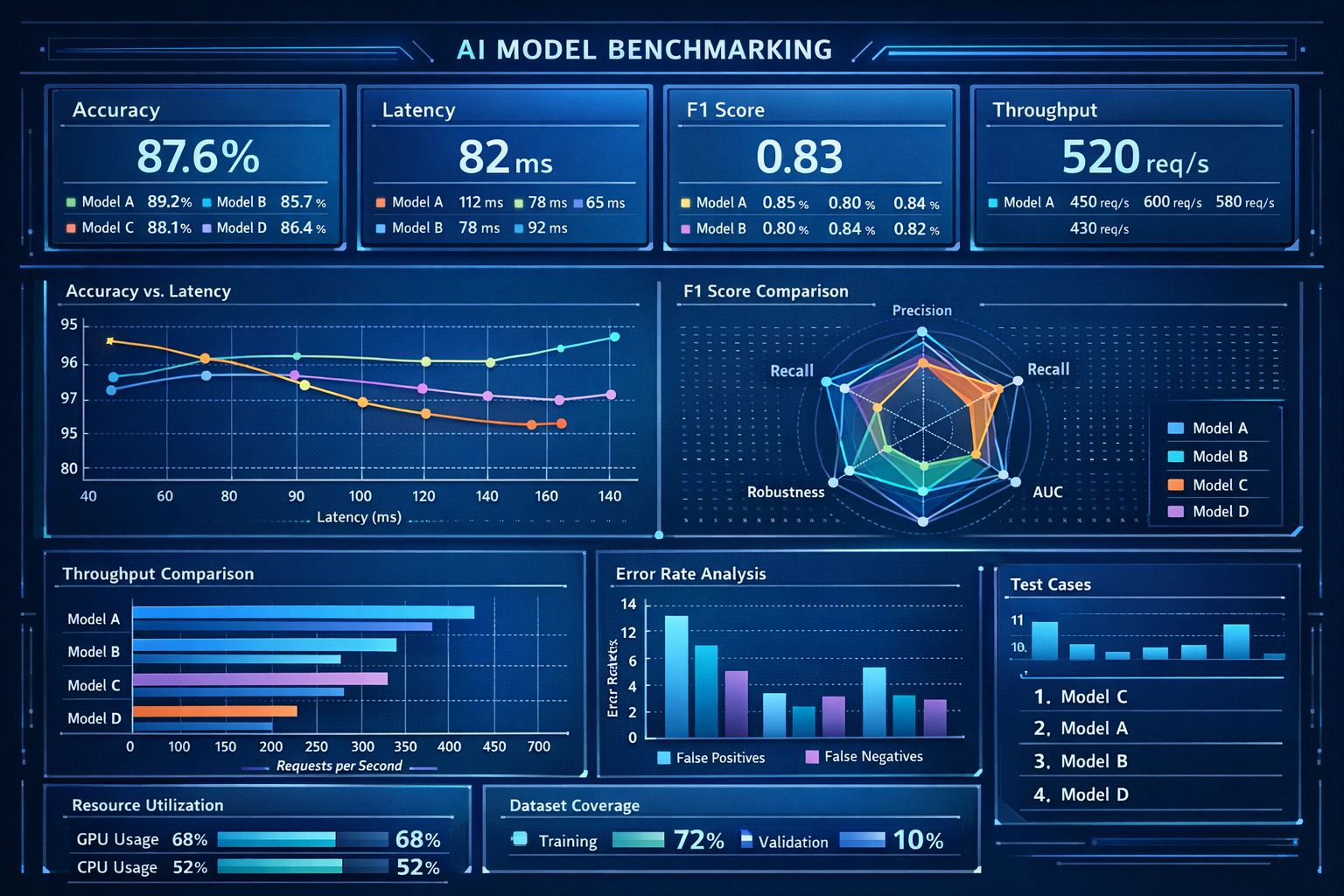
Performance benchmarks showing cost savings and quality retention across quantization levels

Commercial Use Cases

Applicable across AI security teams, research organizations, and enterprise ML operations workflows where systematic model evaluation is a business requirement.

AI Security Teams

Model behavior testing and security assessment for enterprise AI deployments. Red team exercises, adversarial robustness evaluation, prompt injection resistance measurement, and compliance validation against organizational safety policies and industry regulations. Produces deployment readiness certificates with full audit trails.

Research Organizations

Academic and corporate research requiring structured evaluation frameworks with reproducible benchmarking protocols. Longitudinal performance tracking across model versions, publication-ready results with full methodology documentation, and standardized test suites that enable cross-institutional comparison of model capabilities.

Enterprise MLOps Teams

Internal tooling for model evaluation, hardware planning, cost optimization, and production readiness certification. Automated quality gates integrated into CI/CD pipelines that block deployment when benchmark regressions are detected, ensuring that model updates never degrade production performance without explicit human approval.

Evidence of Execution

app_final.py

Flask dashboard with evaluation views and OPML browser

techniques_*.md

Reference library with summaries and scoring rubrics

techniques_mindmap.html

Interactive OPML visualization and taxonomy renderer

setup_mindmap.sh

Deployment and verification automation scripts

benchmarks/

Quantization profiling and vRAM analysis tooling

evaluations.db

SQLite store with full provenance metadata

Interested in This Solution?

Learn how we can build LLM evaluation and optimization infrastructure tailored to your AI initiatives and compliance requirements.

Schedule a Demo View All Projects

In Action

ML engineer celebrating as performance metrics spike upward
Data scientist running benchmarks on a powerful GPU cluster
AI researchers debating neural network architectures at a whiteboard