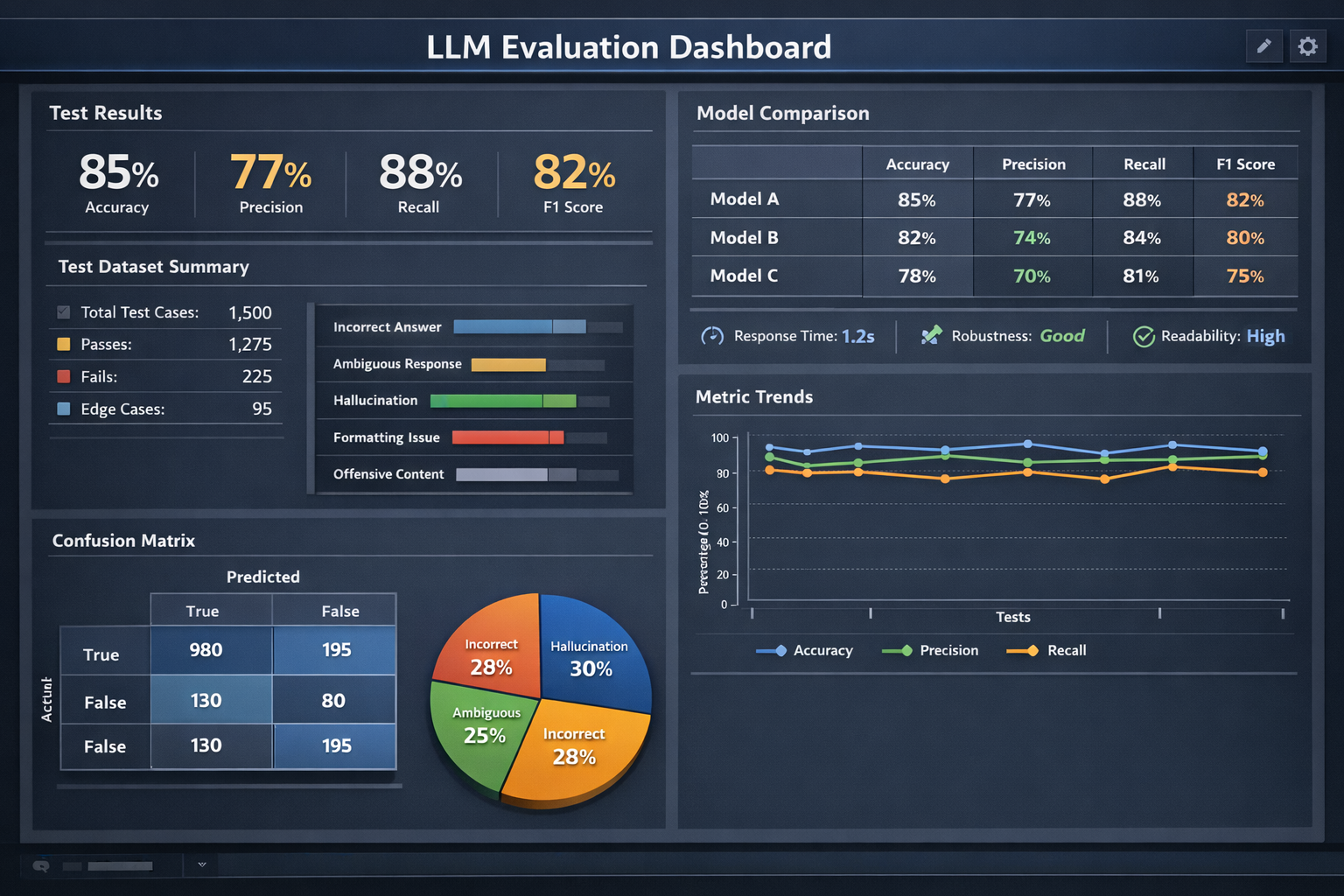
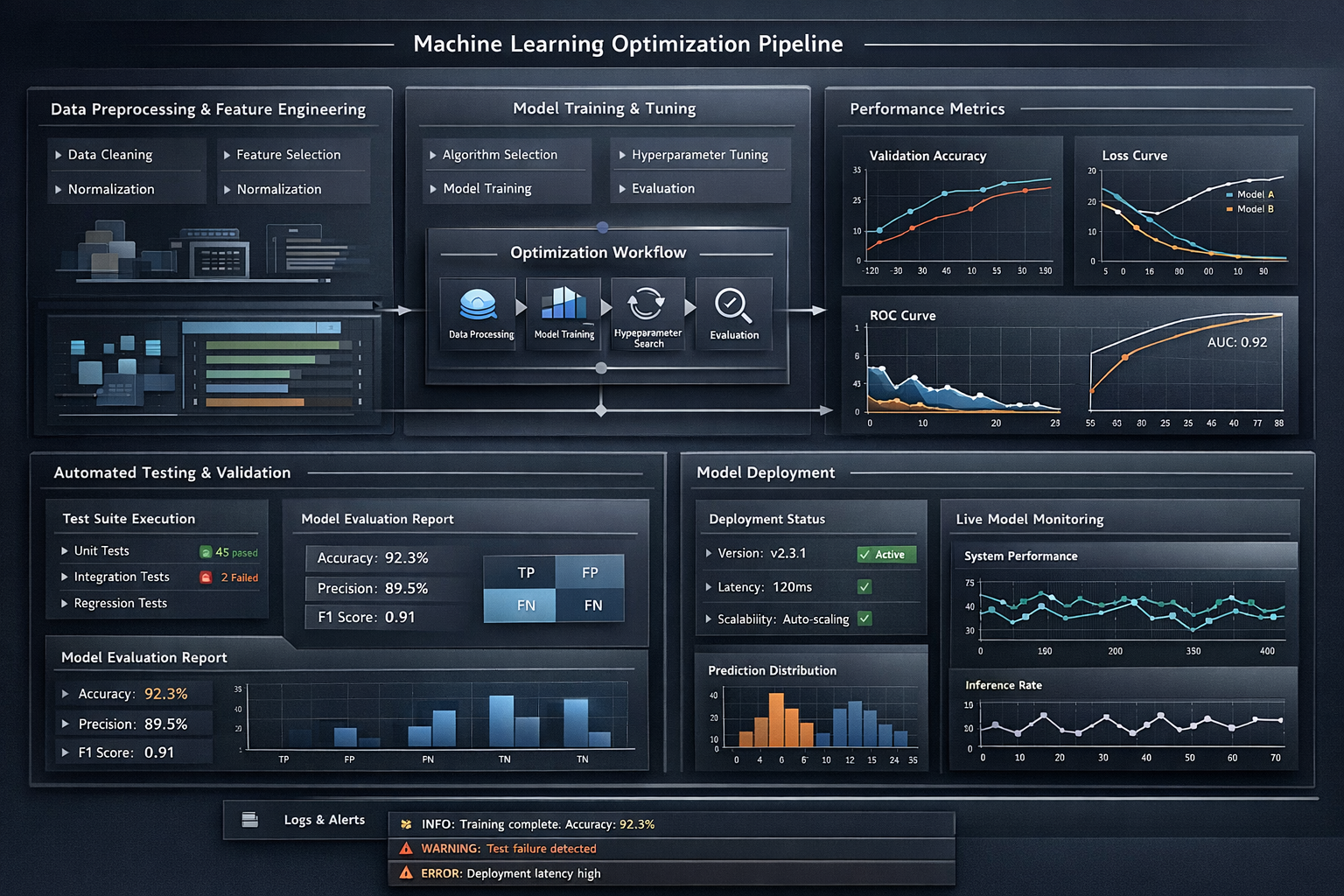
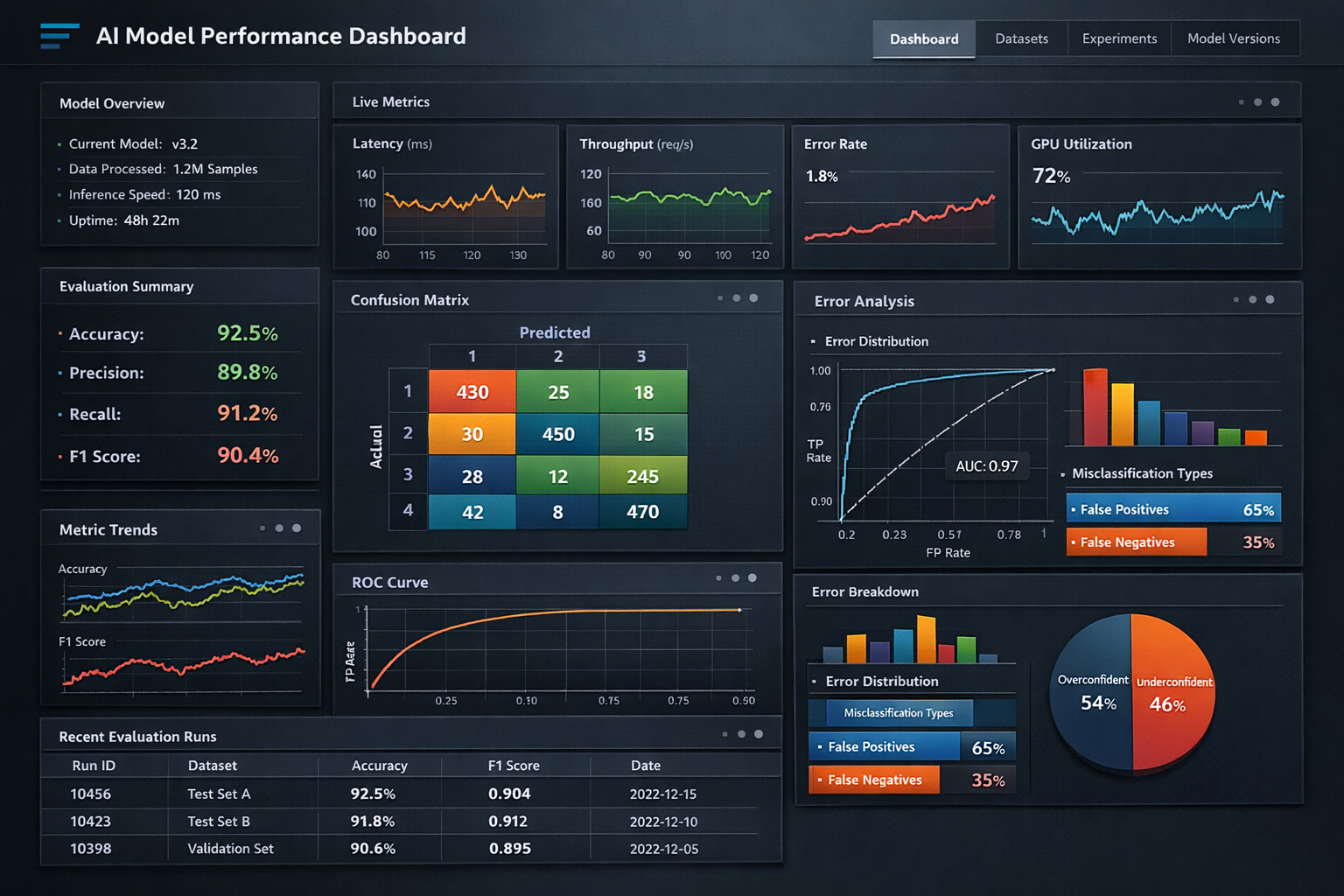
Enterprise research and evaluation framework for testing LLM behavior, cataloging techniques, and visualizing results through interactive dashboards and mindmaps - providing repeatable evaluation and security testing for production AI systems.
As AI adoption accelerates, companies need repeatable evaluation and security testing for model behavior. This framework provides a structured approach to catalog techniques, record evaluations, and present results in a dashboard-friendly format suitable for research and decision making.
The $300B+ enterprise AI market demands rigorous evaluation tooling. By combining structured technique taxonomy with interactive visualization, we enable organizations to understand, test, and improve their AI systems with confidence. As regulatory frameworks like the EU AI Act introduce mandatory model evaluation requirements, organizations that lack systematic testing infrastructure face both compliance risk and competitive disadvantage.
Our framework addresses the full lifecycle of LLM evaluation, from initial model selection through production monitoring. Rather than treating model assessment as a one-time event, the platform establishes continuous evaluation pipelines that track behavioral drift, measure inference performance across hardware configurations, and produce auditable reports for stakeholders ranging from engineering teams to board-level governance committees.
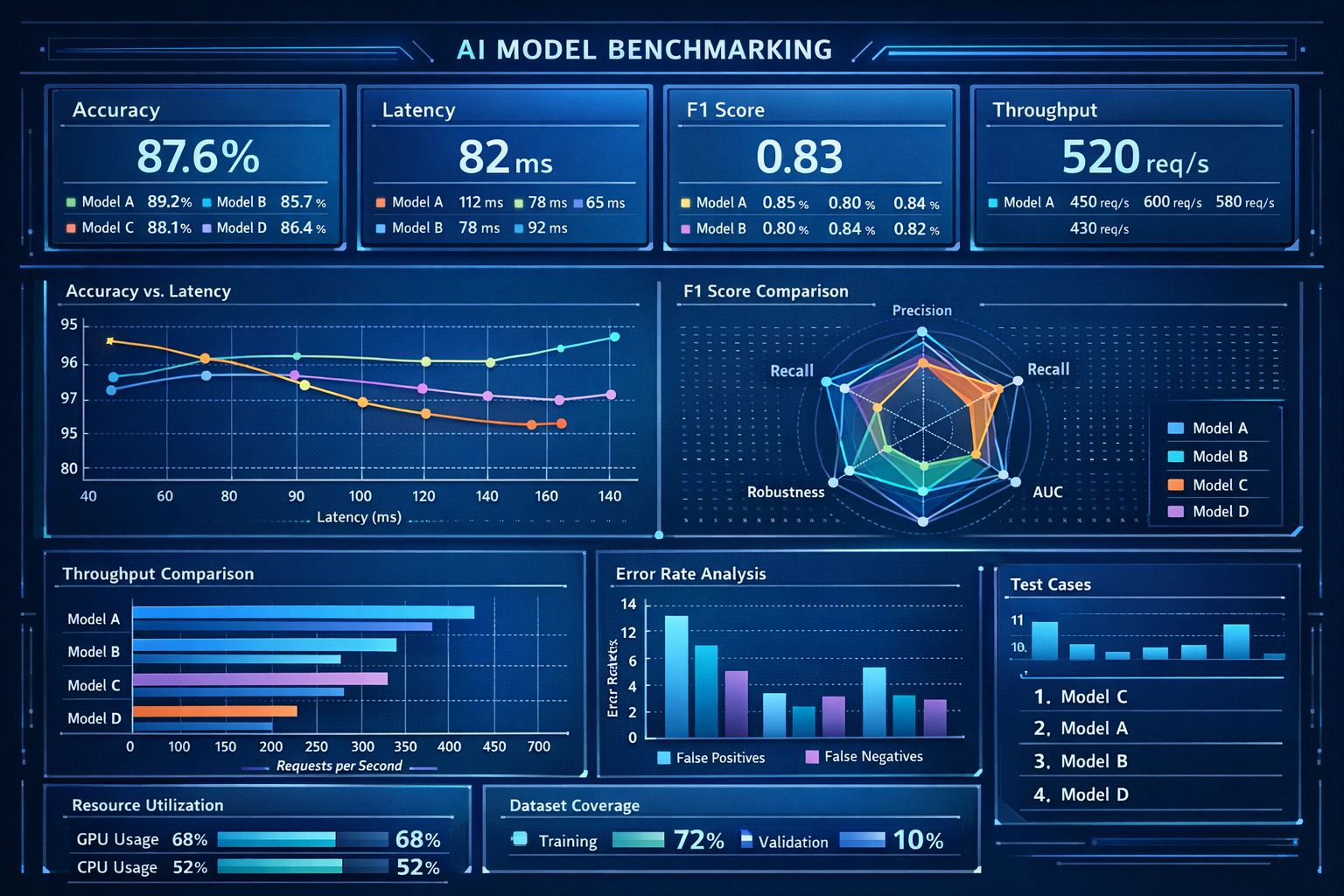
Running large language models in production requires balancing quality, speed, and cost. Our framework provides systematic tools for finding the optimal configuration for any deployment scenario.
Modern LLMs ship at full precision weights that require expensive GPU hardware to serve. Quantization reduces the numerical precision of model weights from 16-bit or 32-bit floating point to smaller representations like 8-bit, 4-bit, or even 2-bit integers. Our framework benchmarks models across GGUF, GPTQ, and AWQ quantization formats, measuring the quality-speed tradeoff at each precision level. For every model tested, we produce a detailed report showing perplexity degradation, tokens-per-second throughput, and vRAM consumption at each quantization tier, enabling data-driven deployment decisions.
GPU memory is the primary constraint in LLM deployment. Our profiler maps the exact vRAM consumption of each model layer, attention head, and KV-cache allocation, enabling precise capacity planning. Teams can simulate different batch sizes, context window lengths, and concurrent request loads before committing to hardware purchases. The framework supports multi-GPU configurations with tensor parallelism, allowing organizations to distribute models across available hardware for maximum utilization.
Real-time visualization of LLM behavior patterns and test results. Track evaluation metrics, view reports, and browse technique taxonomies through an intuitive web interface.
Comprehensive catalog of evaluation techniques and methodologies. Structured taxonomy for consistent testing across models, versions, and quantization formats.
Visualization assets for executive review and analysis. Interactive mindmaps that make complex evaluation data accessible to non-technical stakeholders and governance teams.
From benchmark design to production monitoring, the framework covers every phase of LLM evaluation with reproducible methodology and automated reporting.
Every evaluation follows a reproducible protocol. Test suites define the prompts, expected behavior criteria, and scoring rubrics. The framework runs each test against the target model configuration, records raw outputs, applies automated scoring functions, and generates summary statistics. Results are stored in SQLite with full provenance metadata including model version, quantization format, hardware configuration, and system load at test time. This enables longitudinal analysis across model updates and fair comparison between different deployment configurations.
Enterprise AI deployments require rigorous security testing before production release. The framework includes structured assessment modules that probe model behavior across adversarial inputs, edge cases, and compliance-sensitive scenarios. Test results are categorized by severity and mapped to organizational risk frameworks, enabling security teams to make informed deployment decisions. All assessment results are exportable in JSON and PDF formats for integration with existing governance workflows and regulatory documentation requirements.
Combines technique cataloging with interactive visualization for comprehensive understanding of model capabilities and limitations.
Produces artifacts suitable for internal research and executive review with clear visualizations that translate technical data into business insights.
Built to integrate with evaluation databases and existing AI/ML pipelines seamlessly through standard JSON and SQLite interfaces.
Measurable improvements in AI deployment confidence, cost optimization, and time-to-production for enterprise LLM initiatives.
Through systematic quantization analysis, organizations identify optimal model configurations that deliver near-full-precision quality at a fraction of the hardware cost. Our benchmarking data demonstrates that carefully selected 4-bit quantizations retain 98% of output quality while reducing vRAM requirements by 75%, enabling deployment on significantly less expensive GPU infrastructure. The framework's automated evaluation pipelines reduce the time required for comprehensive model assessment from weeks of manual testing to hours of automated execution.
Model behavior testing and security assessment for enterprise AI deployments. Red team exercises, adversarial robustness evaluation, and compliance validation against organizational safety policies and industry regulations.
Academic and corporate research requiring structured evaluation frameworks. Reproducible benchmarking protocols, longitudinal performance tracking, and publication-ready results with full methodology documentation.
Internal tooling for AI model evaluation, comparison, and decision support. Hardware planning, cost optimization, and production readiness certification for LLM deployments across the organization.
app_final.py Flask implementation
TECHNIQUES_REFERENCE.md and docs
techniques_mindmap.html assets
setup_mindmap.sh and verification
Learn how we can build LLM evaluation and optimization systems for your AI initiatives.